

Mocht u de informatie op onze website kanker-actueel.nl waarderen dan wilt u ons misschien ondersteunen met een donatie

Ons rekeningnummer is: RABO 37.29.31.138 t.n.v. Stichting Gezondheid Actueel in Terneuzen. 

Onze IBANcode is NL79 RABO 0372 9311 38

Als donateur kunt u ook korting krijgen bij verschillende bedrijven. En we hebben een ANBI status

Zie ook in gerelateerde artikelen hiernaast of hieronder.

14 april 2026: Bron: Naturer 25 maart 2026

Vijf zwaar voorbehandelde patiënten met een recidief of ziekteprogressie van uitgezaaide Multiple Myeloma (botkanker - ziekte van Kahler) boekten uitstekende resultaten door een ​​eenmalige intraveneuze infusie van ESO-T01 – een zogeheten nanobody-gerichte, immuun afgeschermde lentivirale vector die zich richt op de receptor BCMA CAR. Bijzonder aan deze studie is dat er voor de productie van ESO-T01 vooraf geen leukafarese of chemotherapie nodig was. ESO-T01 richtte zich selectief op in bloed circulerende T-cellen en herprogrammeerde deze in het lichaam om het CAR-T medicijn tot expressie te brengen, waarna deze cellen zich vermenigvuldigden en een sterke antitumoractiviteit vertoonden zonder gezonde cellen aan te vallen. Blijkt uit een eerste verkennende studie bij 5 patiënten.

Ondanks de kleine studiegroep van slechts 5 patiënten was de effectiviteit wel opvallend positief: 4 van de 5 patiënten bereikten objectieve remissies, waaronder drie volledige aangetoonde complete remissies, met een restziekte (MRD) -negativiteit bij een gevoeligheid van 10⁻⁵ bij alle vier de evalueerbare patiënten op dag 60.

Het Cytokine-release-syndroom als ernstige bijwerking trad op bij 80% van de patiënten (3 patiënten hadden graad 3, 1 patiënt graad 2), die wel allemaal onder controle te krijgen waren met een standaardbehandeling. De meest voorkomende bijwerkingen waren voorbijgaande cytopenie en een behandelbare verhoging van de leverenzymen. Tijdens de studie overleed één patiënt als gevolg van ruggenmergcompressie veroorzaakt door extramedullaire laesies, wat nauw verband hield met de ziekteprogressie.

Hier een grafiek uit het studierapport gekopieerd
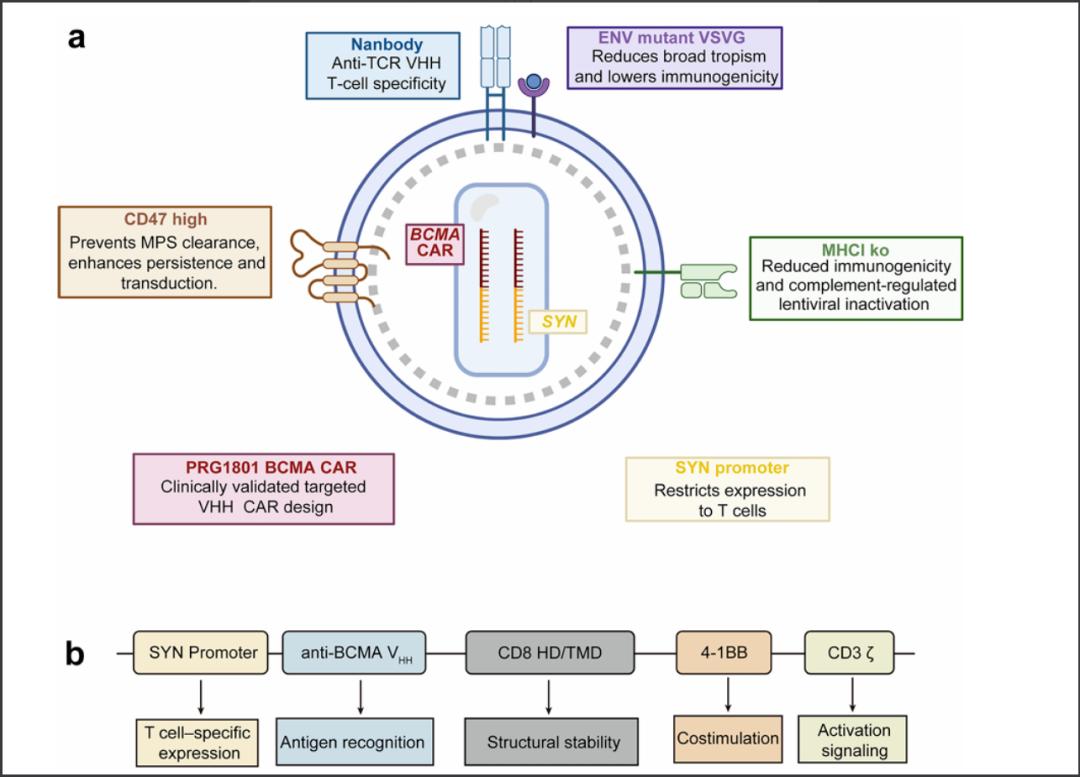
Nature Medicine: AstraZeneca's latest clinical data on in vivo CAR-T therapy shows effectiveness, but one death has been reported.

Hoewel de duurzaamheid onzeker blijft – de mediane follow-up was beperkt tot 6 maanden en de studie werd voortijdig beëindigd in 2025 – is het biologische bewijs van het concept overtuigend en heeft het implicaties die veel verder reiken dan deze eerste verkennende studie aldus de onderzoekers.

Al meer dan tien jaar wordt het verandering brengende potentieel van CAR-T-therapie beperkt door een fundamenteel knelpunt: de productie van de CAR-T cellen duurt lang en is erg duur. De benodigde leukafarese, gecentraliseerde productietijdlijnen, chemotherapie om eventueel aangetaste lymfklieren te behandelen en monitoring in het ziekenhuis leiden gezamenlijk tot vertragingen, kosten en klinische risico's, met name voor patiënten met een agressieve vorm van de ziekte die al vóór de infusie kunnen verslechteren.

Tegen deze achtergrond vertegenwoordigt deze studie geen stapsgewijze behandelingsverbetering, maar een verschuiving in produceren en toepassen van een behandeling: de in vivo generatie / ontwikkelen en produceren van CAR-T-cellen, waarbij het traditionele productieproces volledig wordt omzeild. Met als gevolg dat patiënten die hiervoor in aanmerking komen veel eerder een behandeling kunnen krijgen.

Het volledige studierapport is tegen betaling in te zien en gepubliceerd in Nature:

  • Article
  • Published: 

In vivo generation of anti-BCMA CAR-T cells in relapsed or refractory multiple myeloma: a phase 1 study

  • 11k Accesses

  • Citations

Abstract

In vivo chimeric antigen receptor (CAR)-T cell generation can bypass ex vivo manufacturing and lymphodepletion, potentially simplifying and accelerating access to cellular therapy; preliminary clinical experience supports feasibility and suggests preliminary efficacy. This phase 1, single-arm, open-label trial evaluated the safety and tolerability of ESO-T01, a nanobody-directed, immune-shielded lentiviral vector encoding a humanized anti-B cell maturation antigen (BCMA) CAR, in adults with relapsed or refractory multiple myeloma. ESO-T01 was administered as a single intravenous infusion of 0.2 × 109 transduction units without leukapheresis, ex vivo manufacturing or lymphodepleting chemotherapy. Five heavily pretreated male patients (median three prior lines) were consecutively enrolled and followed for a median of 6.0 months. The trial was stopped early in 2025, and no further enrollment was performed. The primary endpoint was safety and tolerability, and secondary endpoints included efficacy, pharmacokinetics and pharmacodynamics of ESO-T01. No dose-limiting toxicities occurred. All patients developed grade 3 or higher adverse events. Cytokine release syndrome occurred in four patients (three grade 3 and one grade 2) and was managed with corticosteroids, tocilizumab, or supportive care. The most frequent toxicities were transient cytopenias and reversible hepatic enzyme elevations, and three patients experienced grade 2 infections. One patient developed grade 1 immune effector cell-associated neurotoxicity and died from extramedullary lesion-related spinal cord compression. Preliminary antimyeloma activity was observed: four of five patients achieved objective responses, including three stringent complete remissions, with minimal residual disease negativity (10−5) in all evaluable responders (4/4) by day 60. These findings provide preliminary evidence on the feasibility and safety of in vivo CAR-T generation using an immune-shielded vector. ClinicalTrials.gov registration: NCT06791681.

Data availability

All primary data supporting the findings of this study are included in this article and its supplementary files. Extended data tables and figures, together with the supplementary information, provide patient-level data for safety, response, pharmacokinetic and immunophenotyping analyses as well as vector construct, integration site analyses and gating strategies.

The clinical datasets generated and analyzed during this study are not publicly available due to proprietary restrictions and to protect patient privacy and sensitive information. All individual-level clinical data have been deidentified and are stored on the secure data server of Tongji Hospital. Interested researchers may contact the corresponding author to request access to the datasets. Access requires completion of a data access agreement describing the intended research use; commercial or for-profit use is prohibited. After approval by the applicant’s institution and our institutional data access committee, deidentified individual participant-level data will be provided within 6 months after publication and will remain accessible for at least 5 years. The full trial protocol and the statistical analysis plan are provided in the supplementary materials.

All requests for data access should be directed to the corresponding author (cunrui5650@hust.edu.cn), and responses will be provided within 10 working days.

References

  1. Kumar, S. K. et al. Multiple myeloma. Nat. Rev. Dis. Primers 3, 17046 (2017).

    Article PubMed Google Scholar 

  2. Kumar, S. K. et al. Risk of progression and survival in multiple myeloma relapsing after therapy with IMiDs and bortezomib: a multicenter international myeloma working group study. Leukemia 26, 149–157 (2012).

    Article CAS PubMed Google Scholar 

  3. Cappell, K. M. & Kochenderfer, J. N. Long-term outcomes following CAR T cell therapy: what we know so far. Nat. Rev. Clin. Oncol. 20, 359–371 (2023).

    Article CAS PubMed PubMed Central Google Scholar 

  4. Yu, B., Jiang, T. & Liu, D. BCMA-targeted immunotherapy for multiple myeloma. J. Hematol. Oncol. 13, 125 (2020).

    Article CAS PubMed PubMed Central Google Scholar 

  5. Munshi, N. C. et al. Idecabtagene vicleucel in relapsed and refractory multiple myeloma. N. Engl. J. Med. 384, 705–716 (2021).

    Article CAS PubMed Google Scholar 

  6. Berdeja, J. G. et al. Ciltacabtagene autoleucel, a B-cell maturation antigen-directed chimeric antigen receptor T-cell therapy in patients with relapsed or refractory multiple myeloma (CARTITUDE-1): a phase 1b/2 open-label study. Lancet 398, 314–324 (2021).

    Article CAS PubMed Google Scholar 

  7. Wang, D. et al. A phase 1 study of a novel fully human BCMA-targeting CAR (CT103A) in patients with relapsed/refractory multiple myeloma. Blood 137, 2890–2901 (2021).

    Article CAS PubMed Google Scholar 

  8. Chen, W. et al. Phase II study of fully human BCMA-targeting CAR-T cells (zevorcabtagene autoleucel) in patients with relapsed/refractory multiple myeloma. Exp. Hematol. Oncol.14, 119 (2025).

  9. Locke, F. L. et al. Impact of vein-to-vein time in patients with R/R LBCL treated with axicabtagene ciloleucel. Blood Adv. 9, 2663–2676 (2025).

    Article CAS PubMed PubMed Central Google Scholar 

  10. Amini, L. et al. Preparing for CAR T cell therapy: patient selection, bridging therapies and lymphodepletion. Nat. Rev. Clin. Oncol. 19, 342–355 (2022).

    Article PubMed Google Scholar 

  11. Ayala Ceja, M., Khericha, M., Harris, C. M., Puig-Saus, C. & Chen, Y. Y. CAR-T cell manufacturing: major process parameters and next-generation strategies. J. Exp. Med. 221, e20230903 (2024).

  12. Mailankody, S. et al. Allogeneic BCMA-targeting CAR T cells in relapsed/refractory multiple myeloma: phase 1 UNIVERSAL trial interim results. Nat. Med. 29, 422–429 (2023).

    Article CAS PubMed Google Scholar 

  13. Marin, D. et al. Safety, efficacy and determinants of response of allogeneic CD19-specific CAR-NK cells in CD19+ B cell tumors: a phase 1/2 trial. Nat. Med. 30, 772–784 (2024).

    Article CAS PubMed PubMed Central Google Scholar 

  14. Heczey, A. et al. Anti-GD2 CAR-NKT cells in relapsed or refractory neuroblastoma: updated phase 1 trial interim results. Nat. Med. 29, 1379–1388 (2023).

    Article CAS PubMed Google Scholar 

  15. Diorio, C., Teachey, D. T. & Grupp, S. A. Allogeneic chimeric antigen receptor cell therapies for cancer: progress made and remaining roadblocks. Nat. Rev. Clin. Oncol. 22, 10–27 (2025).

    Article CAS PubMed Google Scholar 

  16. Labanieh, L. & Mackall, C. L. CAR immune cells: design principles, resistance and the next generation. Nature 614, 635–648 (2023).

    Article CAS PubMed Google Scholar 

  17. Hunter, T. L. et al. In vivo CAR T cell generation to treat cancer and autoimmune disease. Science 388, 1311–1317 (2025).

    Article CAS PubMed Google Scholar 

  18. Nicolai, C. J. et al. In vivo CAR T-cell generation in nonhuman primates using lentiviral vectors displaying a multidomain fusion ligand. Blood 144, 977–987 (2024).

    Article CAS PubMed PubMed Central Google Scholar 

  19. Nawaz, W. et al. AAV-mediated in vivo CAR gene therapy for targeting human T-cell leukemia. Blood Cancer J. 11, 119 (2021).

    Article PubMed PubMed Central Google Scholar 

  20. Bozza, M. et al. A nonviral, nonintegrating DNA nanovector platform for the safe, rapid, and persistent manufacture of recombinant T cells. Sci. Adv. 7, eabf1333 (2021).

  21. Rurik, J. G. et al. CAR T cells produced in vivo to treat cardiac injury. Science 375, 91–96 (2022).

    Article CAS PubMed PubMed Central Google Scholar 

  22. Xu, J. et al. In-vivo B-cell maturation antigen CAR T-cell therapy for relapsed or refractory multiple myeloma. Lancet 406, 228−231 (2025).

  23. Yakoub-Agha, I. et al. Management of adults and children undergoing chimeric antigen receptor T-cell therapy: best practice recommendations of the European Society for Blood and Marrow Transplantation (EBMT) and the Joint Accreditation Committee of ISCT and EBMT (JACIE). Haematologica 105, 297–316 (2020).

    Article PubMed PubMed Central Google Scholar 

  24. Fan, H. et al. Current treatment paradigm and survival outcomes among patients with newly diagnosed multiple myeloma in China: a retrospective multicenter study. Cancer Biol. Med. 20, 77–87 (2023).

    Article PubMed PubMed Central Google Scholar 

  25. Tang, W. et al. Treatment attrition rates and relevant risk factors in multiple myeloma: a real-world study in China. Front. Pharmacol. 14, 979111 (2023).

    Article PubMed PubMed Central Google Scholar 

  26. Cowan, A. J. et al. The global state of hematopoietic cell transplantation for multiple myeloma: an analysis of the Worldwide Network of Blood and Marrow Transplantation Database and the Global Burden of Disease Study. Biol. Blood Marrow Transplant. 26, 2372–2377 (2020).

    Article PubMed PubMed Central Google Scholar 

  27. Milani, M. et al. Phagocytosis-shielded lentiviral vectors improve liver gene therapy in nonhuman primates. Sci. Transl. Med. 11, eaav7325 (2019).

  28. Milani, M. et al. Genome editing for scalable production of alloantigen-free lentiviral vectors for in vivo gene therapy. EMBO Mol. Med. 9, 1558–1573 (2017).

    Article CAS PubMed PubMed Central Google Scholar 

  29. Wang, Y. & Shao, W. Innate immune response to viral vectors in gene therapy. Viruses 15, 1801 (2023).

  30. Kim, J. T. et al. Dendritic cell−targeted lentiviral vector immunization uses pseudotransduction and DNA-mediated STING and cGAS activation. Sci. Immunol. 2, eaal1329 (2017).

  31. Ganaie, S. S., Wang, Z., Su, B. & Mir, S. Editorial: Virus-induced innate immune response and inflammation. Front. Microbiol. 14, 1213270 (2023).

    Article PubMed PubMed Central Google Scholar 

  32. Huang, J., Rong, L., Wang, E. & Fang, Y. Pseudoprogression of extramedullary disease in relapsed acute lymphoblastic leukemia after CAR T-cell therapy. Immunotherapy 13, 5–10 (2021).

    Article CAS PubMed Google Scholar 

  33. Danylesko, I. et al. Immune imitation of tumor progression after anti-CD19 chimeric antigen receptor T cells treatment in aggressive B-cell lymphoma. Bone Marrow Transplant. 56, 1134–1143 (2021).

    Article CAS PubMed Google Scholar 

  34. Ivashkiv, L. B. & Donlin, L. T. Regulation of type I interferon responses. Nat. Rev. Immunol. 14, 36–49 (2014).

    Article CAS PubMed PubMed Central Google Scholar 

  35. Xiao, X. et al. Mechanisms of cytokine release syndrome and neurotoxicity of CAR T-cell therapy and associated prevention and management strategies. J. Exp. Clin. Cancer Res. 40, 367 (2021).

    Article CAS PubMed PubMed Central Google Scholar 

  36. Butman, J. et al. Steroid prophylaxis in patients receiving CAR T-cell therapy for relapsed and refractory non-Hodgkin lymphoma. Blood 144, 4507–4507 (2024).

    Article Google Scholar 

  37. Costa, B. A. et al. Prognostic impact of corticosteroid and tocilizumab use following chimeric antigen receptor T-cell therapy for multiple myeloma. Blood Cancer J. 14, 84 (2024).

    Article PubMed PubMed Central Google Scholar 

  38. Li, C. et al. Equecabtagene autoleucel in patients with relapsed or refractory multiple myeloma: the FUMANBA-1 nonrandomized clinical trial. JAMA Oncol. 10, 1681–1688 (2024).

    Article PubMed PubMed Central Google Scholar 

  39. Dogan, A. et al. B-cell maturation antigen expression across hematologic cancers: a systematic literature review. Blood Cancer J. 10, 73 (2020).

    Article PubMed PubMed Central Google Scholar 

  40. Kim, I., Wu, G., Chai, N., Jordan, S. & Klein, A. Dynamic BCMA expression by alloreactive B cells coupled with donor specific antibody production during de novo alloantibody responses. J. Heart Lung Transplant. 38, S249 (2019).

    Article Google Scholar 

  41. Martin, J. et al. B-cell maturation antigen (BCMA) as a biomarker and potential treatment target in systemic lupus erythematosus. Int. J. Mol. Sci. 25, 10845 (2024).

    Article CAS PubMed PubMed Central Google Scholar 

  42. Maeda, K. et al. Interleukin-6 aborts lymphopoiesis and elevates production of myeloid cells in systemic lupus erythematosus-prone B6.Sle1.Yaa animals. Blood 113, 4534–4540 (2009).

    Article CAS PubMed PubMed Central Google Scholar 

  43. Sun, Y. et al. Early B lymphocyte subsets in blood predict prognosis in sepsis. Front. Immunol. 15, 1437864 (2024).

    Article CAS PubMed PubMed Central Google Scholar 

  44. Wang, X. et al. Dysregulated hematopoiesis in bone marrow marks severe COVID-19. Cell Discov. 7, 60 (2021).

    Article CAS PubMed PubMed Central Google Scholar 

  45. Raje, N. et al. Anti-BCMA CAR T-cell therapy bb2121 in relapsed or refractory multiple myeloma. N. Engl. J. Med. 380, 1726–1737 (2019).

    Article CAS PubMed PubMed Central Google Scholar 

  46. Martin, N. et al. Idecabtagene vicleucel (ide-cel, bb2121) responses are characterized by early and temporally consistent activation and expansion of CAR T cells with a T effector phenotype. Blood 136, 17–18 (2020).

    Article Google Scholar 

  47. Wright, J. F. Quantification of CpG motifs in rAAV genomes: avoiding the Toll. Mol. Ther. 28, 1756–1758 (2020).

    Article CAS PubMed PubMed Central Google Scholar 

  48. Paremskaia, A. I. et al. Codon-optimization in gene therapy: promises, prospects and challenges. Front. Bioeng. Biotechnol. 12, 1371596 (2024).

    Article PubMed PubMed Central Google Scholar 

  49. Yoshida, T. et al. Introduction of sugar-modified nucleotides into CpG-containing antisense oligonucleotides inhibits TLR9 activation. Sci. Rep. 14, 11540 (2024).

    Article CAS PubMed PubMed Central Google Scholar 

  50. Kumar, S. et al. International Myeloma Working Group consensus criteria for response and minimal residual disease assessment in multiple myeloma. Lancet Oncol. 17, e328–e346 (2016).

    Article PubMed Google Scholar 

  51. Lee, D. W. et al. ASTCT consensus grading for cytokine release syndrome and neurologic toxicity associated with immune effector cells. Biol. Blood Marrow Transplant. 25, 625–638 (2019).

    Article CAS PubMed Google Scholar 

Download references

Acknowledgements

This work was supported by the National Natural Science Foundation of China (82170223 to C.L.) and the Natural Science Foundation of Hubei Province (2024AFD421 to C.L.). We thank H. Mei for helpful discussions. We thank all clinical investigators, research nurses and study coordinators for their contributions. We also acknowledge the members of the independent data monitoring committee for their oversight. The study was supported in part by EsoBiotec, which provided the ESO-T01 vector and technical input. The funder had no role in study design, data collection, data analysis, data interpretation or writing of the report.

Author information

Authors and Affiliations

Contributions

C.L., N.A., D.W. and P.Z. contributed to the analyses and interpretation of the clinical data. J.Z. and P.P. contributed to the development of the ESO-T01 construct. C.L., D.W., P.Z. and J.Z. designed the clinical protocol. C.L., D.W., P.Z., L.X., H.R. and Y.W. contributed to the clinical treatments. N.A., J.H., X.W. and Y.G. collected and assembled data. N.A., C.L, P.Z. and Y.B. wrote the paper. C.L. directed the study and had final responsibility to submit for publication. All authors read and approved the final paper.

Corresponding author

Correspondence to Chunrui Li.

Ethics declarations

Competing interests

P.P. is employed by and owns stocks in EsoBiotec. J.Z. is employed by and owns stocks in Shenzhen Pregene Biopharma Company. The other authors declare no competing interests.

Peer review

Peer review information

Nature Medicine thanks Leo Rasche, Eric Smith and the other, anonymous, reviewer(s) for their contribution to the peer review of this work. Primary Handling Editor: Anna Ranzoni, in collaboration with the Nature Medicine team.

Additional information

Publisher’s note Springer Nature remains neutral with regard to jurisdictional claims in published maps and institutional affiliations.


Plaats een reactie ...

Reageer op "ESO-T01 toegediend in een eenmalige intraveneuze injectie geeft uitstekende resultaten van deze vorm van CAR-T celtherapie bij patienten met Multiple Myeloma (botkanker - Kahler)"


Gerelateerde artikelen
 

Gerelateerde artikelen

ESO-T01 toegediend in een >> CAR-T therapie met Ciltacabtagene >> Immuuntherapie met anti-BCMA/GPRC5D >> CAR T-celtherapie met het >> JNJ-4528 is een vorm van CAR-T >> CAR-T cel behandeling met >>